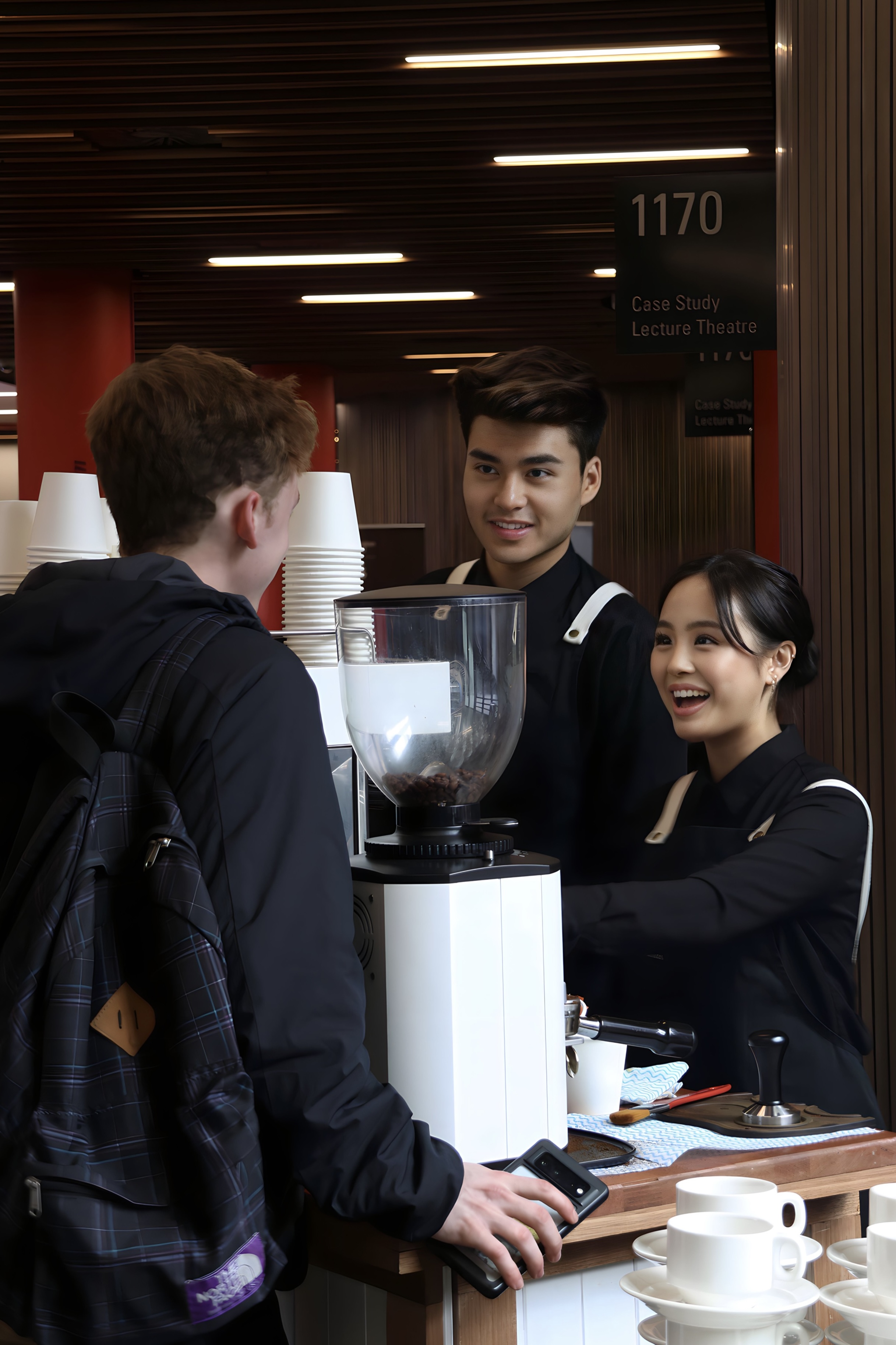
A 200-person conference where everyone breaks at 10:30am creates a very different service environment from a 200-person event where guests arrive gradually over several hours. There is no universal guest-to-barista ratio. These are the factors that matter.
The Starting Point
START WITH YOUR GUEST NUMBERS
Guest numbers provide the starting point, but they should not be the only consideration.
When planning the service, also think about:
- How many guests are likely to drink coffee
- Whether they arrive together
- How long the service period runs
- Whether there are scheduled breaks
- Whether other drinks are available
- How complex the menu is
Service Patterns
PEAK DEMAND MATTERS MORE THAN TOTAL ATTENDANCE
Consider a corporate conference.
There may be 300 attendees at the event, but the difficult period is not necessarily serving 300 drinks across the whole day. It is potentially serving a large proportion of those attendees during a 20-minute morning break.
That is why experienced event coffee operators look at service patterns, not simply headcount.
The Complete Workflow
THE EQUIPMENT MATTERS TOO
Adding another barista does not automatically double service capacity if the equipment cannot support the workflow.
Event organisers should consider:
- Espresso machine capacity
- Number of group heads
- Grinder setup
- Work space
- Milk preparation area
- Order-taking process
- Available power
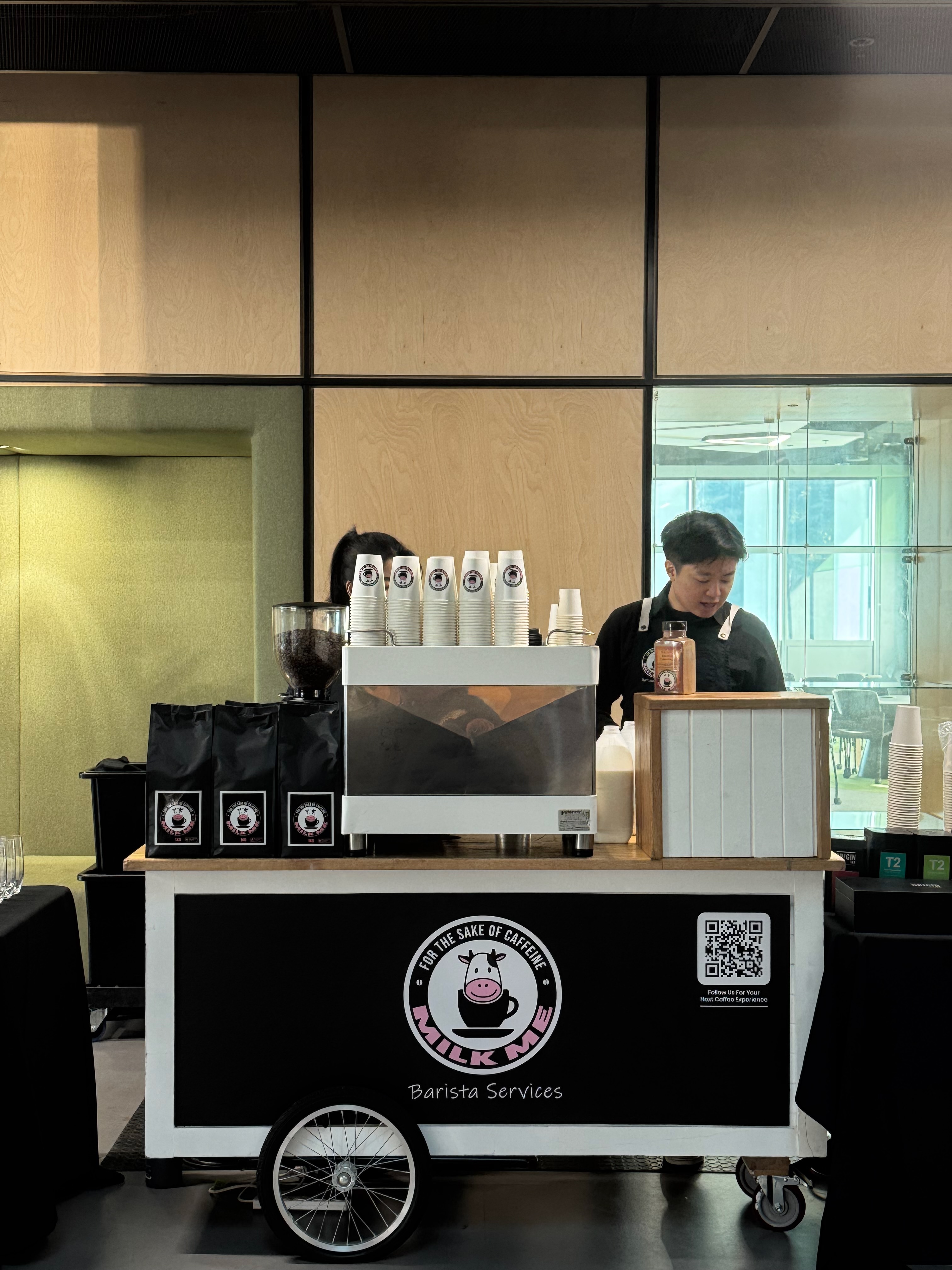
This is why coffee service should be considered as a complete operational setup rather than simply hiring a certain number of people.
Choosing the Team
ONE BARISTA VS MULTIPLE BARISTAS
A single professional barista can work extremely well for smaller events or environments with steady demand.
Additional baristas become more important when you have:
- Large guest numbers
- Short service windows
- Conference breaks
- High-volume corporate events
- Complex drink menus
- Multiple service points
The goal is to avoid long queues without sacrificing coffee quality or hospitality.
Planning for 100
WHAT ABOUT 100 GUESTS?
Rather than publishing an arbitrary rule such as “one barista per 100 guests,” we recommend looking at the actual event.
For 100 guests, ask:
- Are all 100 arriving together?
- How long is the coffee service?
- Is coffee complimentary?
- Is there a scheduled break?
- What drinks are being served?
- What equipment is available?
Those answers will tell you much more than the guest number alone.
Planning at Scale
WHAT ABOUT 200+ GUESTS?
As event size grows, throughput becomes increasingly important.
MILK ME has commercial setups capable of serving up to 200+ cups per hour depending on configuration.
For larger events, the appropriate combination of equipment, staffing and service design should be established before the event rather than relying on a simple staffing ratio.
Operational Experience
WHAT OUR BARISTAS LOOK FOR
What causes queues?
A sudden rush, unclear ordering and a workflow that does not match the event's peak demand.
More staff or better workflow?
The two need to work together. Extra staff can only help when equipment and responsibilities are organised.
Events compared with cafés
Demand often arrives in concentrated waves, so preparation and adaptability become especially important.
What should organisers share?
Accurate guest numbers, service times, scheduled breaks, menu requirements and venue access details.
Service Beyond the Cup
HOSPITALITY STILL MATTERS AT HIGH VOLUME
Speed matters, but event coffee service should not feel like a production line.
Guests still expect:
- Friendly interaction
- Correct orders
- Consistent coffee
- Professional presentation
Not Sure How Many Baristas You Need?
PLAN YOUR COFFEE SERVICE
Tell MILK ME your guest numbers, event format, venue, service times and drinks menu, and we will recommend the appropriate setup.
Plan Your Coffee Service →